Best SEO Tools in 2025

Search engine optimization has become one of the most competitive disciplines in digital marketing, and the tools you use directly determine how quickly and accurately you can make decisions. In 2025, the SEO tools market has matured significantly, with leading platforms now integrating artificial intelligence, real-time data feeds, and cross-channel analytics that were unavailable just a few years ago.
Whether you are a blogger trying to grow organic traffic for the first time, a digital marketer managing multiple client campaigns, a developer running technical SEO audits, or a business owner competing in a crowded local market, the right combination of SEO tools will save you hours of work each week and give you the data-driven insights needed to outrank your competitors.
This guide reviews and compares the best SEO tools available in 2025 across every major use case. Each tool has been evaluated on data accuracy, feature depth, ease of use, value for money, and suitability for different types of users and budgets.
Table of Contents
- Why Choosing the Right SEO Tool Matters in 2025
- Best All-in-One SEO Platforms
- Best Keyword Research Tools
- Best Backlink Analysis and Link Building Tools
- Best Technical SEO and Site Audit Tools
- Best Rank Tracking Tools
- Best Free SEO Tools in 2025
- Best SEO Tools for Beginners
- Best SEO Tools for Agencies
- Master Comparison Table: All Tools at a Glance
- How to Choose the Right SEO Tool for Your Needs
- Frequently Asked Questions
1. Why Choosing the Right SEO Tool Matters in 2025
The SEO tools landscape in 2025 is both more capable and more complex than it has ever been. Google processes over 8.5 billion searches daily, and competition for the top positions in organic search results is intense across virtually every industry. Without reliable data and the right software to interpret it, SEO decisions are based on guesswork rather than evidence.
The right SEO tools allow you to identify high-value keyword opportunities before your competitors do, understand exactly why competitor pages outrank yours, detect and fix technical issues that prevent your pages from being properly crawled and indexed, monitor your rankings across thousands of keywords simultaneously, and build a backlink profile that builds domain authority over time.
However, not every tool is right for every situation. The best SEO tool for a solo blogger with a $50 per month budget is very different from the best tool for a ten-person agency managing forty client accounts. This guide is organized by use case so you can quickly find the tools that match your specific situation.
|
User Type |
Primary Need |
Recommended Budget Range |
Key Tools to Consider |
|
Beginner Blogger |
Keyword ideas and basic rank tracking |
Free to $30 per month |
Google Search Console, Ubersuggest, KWFinder |
|
Digital Marketer |
All-in-one campaigns and reporting |
$100 to $250 per month |
SEMrush, Ahrefs, Moz Pro |
|
SEO Professional |
Deep data and technical auditing |
$200 to $500 per month |
Ahrefs, Screaming Frog, SEMrush |
|
Business Owner |
Rankings, local SEO, and competitor data |
$50 to $150 per month |
Moz Pro, SEMrush, BrightLocal |
|
SEO Agency |
Multi-client management and white-label |
$300 to $1,000 per month |
SEMrush Business, Ahrefs, Raven Tools |
2. Best All-in-One SEO Platforms
All-in-one SEO platforms combine keyword research, backlink analysis, rank tracking, site auditing, and reporting into a single subscription. For most users, starting with one strong all-in-one platform is more efficient and cost-effective than subscribing to five specialized tools separately.
Ahrefs
Ahrefs is the preferred SEO platform for professionals worldwide and consistently ranks as the most trusted tool for backlink and keyword data accuracy. Its database is updated continuously and covers over 20 billion keywords across more than 10 search engines. In 2026, Ahrefs added an expanded AI content grading feature and an upgraded web explorer that allows you to search the live web by keyword, URL pattern, or linking domain.
- Best for: Backlink analysis, keyword research, content gap analysis, and competitive intelligence.
- Pricing: Lite at $129 per month, Standard at $249 per month, Advanced at $449 per month, Enterprise pricing on request.
- Strengths: The most accurate backlink index in the industry, excellent keyword difficulty scoring, intuitive interface, and best-in-class Content Explorer for content research.
- Limitations: No PPC data, no social media monitoring, and the Lite plan limits historical data access.
SEMrush
SEMrush is the most feature-complete SEO and digital marketing platform available in 2026. With over 55 tools covering SEO, pay-per-click advertising, content marketing, social media, and competitive research, it is the tool of choice for marketing teams and agencies that need one platform to manage multiple disciplines. SEMrush's keyword database now exceeds 25 billion keywords and its traffic analytics feature provides detailed visitor estimates for any domain.
- Best for: All-in-one digital marketing, agency client reporting, PPC research alongside SEO, and content marketing planning.
- Pricing: Pro at $139.95 per month, Guru at $249.95 per month, Business at $499.95 per month.
- Strengths: Broadest feature set of any SEO platform, excellent reporting and white-label options, strong local SEO features, and integrated content writing assistant.
- Limitations: Can feel overwhelming for beginners due to the volume of features, and pricing escalates quickly for additional users.
Moz Pro
Moz is one of the oldest and most respected names in SEO software. Its Domain Authority metric remains the most widely cited third-party domain strength score in the industry. Moz Pro is particularly well-suited for teams that are new to SEO or moving from basic free tools to a paid platform for the first time, thanks to its clean interface and strong educational resources.
- Best for: Beginners to intermediate SEO practitioners, domain authority monitoring, and link building outreach research.
- Pricing: Starter at $49 per month, Standard at $99 per month, Medium at $179 per month, Large at $299 per month.
- Strengths: Easiest all-in-one tool to learn, strong on-page optimization recommendations, MozBar browser extension, and Domain Authority metric universally recognized in link building outreach.
- Limitations: Smaller backlink index than Ahrefs and SEMrush, and keyword data can lag behind the two leading platforms in volume and freshness.
3. Best Keyword Research Tools
Keyword research is the process of identifying the exact search terms your target audience uses and understanding the competition required to rank for each term. Dedicated keyword research tools go deeper than the keyword features inside all-in-one platforms and are often preferred by content strategists who spend the majority of their time planning and executing content campaigns.
|
Tool |
Database Size |
Best Feature |
Starting Price |
Free Plan |
|
Ahrefs Keywords Explorer |
20 billion+ |
Traffic potential estimates per keyword |
$129 per month |
No |
|
SEMrush Keyword Magic Tool |
25 billion+ |
Keyword intent classification |
$139.95 per month |
Limited |
|
Google Keyword Planner |
Google data |
Direct source search volume data |
Free |
Yes, full |
|
KWFinder by Mangools |
2.5 billion+ |
Long-tail keyword difficulty scoring |
$49 per month |
10-day trial |
|
Ubersuggest |
1 billion+ |
Affordable with content ideas |
$29 per month |
Yes, limited |
|
AnswerThePublic |
Question-based |
Visual question and preposition maps |
$9 per month |
3 searches/day |
|
Keyword Surfer |
Live SERP data |
Free in-SERP keyword volumes via Chrome |
Free |
Yes, full |
When selecting a keyword research tool, the three metrics that matter most are search volume accuracy, keyword difficulty reliability, and the depth of related keyword suggestions. Ahrefs and SEMrush lead on all three dimensions but at a higher price point. KWFinder is the strongest mid-range option, particularly for users whose primary focus is identifying low-competition long-tail keywords to target with blog content.
4. Best Backlink Analysis and Link Building Tools
Backlinks remain one of the top three ranking factors in Google's algorithm. Understanding your backlink profile, identifying toxic links, discovering competitor link sources, and finding new link building opportunities all require dedicated backlink analysis tools with large, frequently updated link databases.
Ahrefs Site Explorer
Ahrefs maintains the largest active backlink index in the industry, with over 35 trillion known links updated every 15 to 30 minutes. Its Site Explorer is the standard tool for backlink analysis among SEO professionals and provides unmatched depth for competitor link research, broken link building, and unlinked brand mention discovery.
- Referring domain history graph showing link growth or decline over time
- Anchor text distribution analysis to identify over-optimized anchor profiles
- New and lost backlink alerts via email or in-app notifications
- Link intersect tool to find sites linking to competitors but not to your domain
- Best by links and best by shares reports to identify top-performing competitor content
Majestic SEO
Majestic specializes exclusively in backlink data and has developed two proprietary metrics that are widely used in the SEO industry: Trust Flow, which measures the quality of links pointing to a domain, and Citation Flow, which measures the volume of links. Majestic is often used alongside Ahrefs as a second data source to cross-reference link quality scores.
- Trust Flow and Citation Flow metrics for quality and quantity measurement
- Topical Trust Flow showing which topic categories a site has earned trust in
- Bulk backlink checker for analyzing multiple URLs simultaneously
- Pricing: Lite at $49.99 per month, Pro at $99.99 per month, API at $399.99 per month.
Moz Link Explorer
Moz Link Explorer provides backlink data alongside Moz's Domain Authority and Page Authority metrics, making it particularly useful when conducting outreach for link building campaigns where you need to quickly assess the authority of a prospect website. The Spam Score metric helps identify potentially toxic links that should be disavowed.
- Domain Authority and Page Authority scores for evaluating link prospects
- Spam Score to identify low-quality or potentially harmful backlinks
- Discovered and lost links tracking
- Link intersect and top pages reports
5. Best Technical SEO and Site Audit Tools
Technical SEO tools crawl your website the way Googlebot does and surface issues that prevent your pages from being properly crawled, indexed, and ranked. These tools are essential for any website with more than a few dozen pages, and they are indispensable for e-commerce sites, news publishers, and content-heavy websites where technical issues can affect thousands of pages simultaneously.
Screaming Frog SEO Spider
Screaming Frog remains the gold standard for desktop-based website crawling in 2025. It crawls your website and presents an exhaustive list of technical issues across hundreds of data points. The free version crawls up to 500 URLs, which is sufficient for most small websites. The paid license unlocks unlimited crawling and advanced integrations with Google Analytics 4, Google Search Console, and PageSpeed Insights.
- Best for: In-depth technical audits, crawl analysis, redirect mapping, and duplicate content identification.
- Pricing: Free for up to 500 URLs. Paid license at 259 GBP per year for unlimited crawls.
- Key features: Broken link detection, redirect chain visualization, duplicate content and meta data identification, JavaScript rendering, custom extraction with XPath and regex, and scheduled crawls.
Google Search Console
Google Search Console is a free tool provided directly by Google and is non-negotiable for any website owner doing SEO in 2025. Unlike third-party tools that estimate your data, Search Console provides exact information about how Google sees, crawls, and indexes your website. It is the authoritative source for indexation status, Core Web Vitals measurements, manual actions, and search performance data.
- Best for: Monitoring indexation health, diagnosing crawl errors, reviewing Core Web Vitals in field data, and tracking organic search performance.
- Pricing: Completely free.
- Key features: Page Indexing report, URL Inspection tool, Core Web Vitals report, Search Performance report, Manual Actions report, and sitemap submission.
Sitebulb
Sitebulb is a desktop-based crawler that excels at presenting technical SEO data in a highly visual and prioritized format. It assigns hint scores to each issue based on severity and potential impact, making it easier for less experienced SEO practitioners to understand which issues to fix first. Its visualizations of site structure, internal links, and crawl depth are particularly valuable.
- Best for: Client-facing technical SEO audits, visual site architecture mapping, and prioritized issue identification.
- Pricing: Lite at $13.50 per month, Pro at $27 per month, Enterprise pricing available.
6. Best Rank Tracking Tools
Rank tracking tools monitor your keyword positions in Google and other search engines over time, at the level of a specific country, region, city, or device type. Accurate rank tracking is essential for measuring the results of your SEO work, catching ranking drops before they become serious problems, and identifying opportunities where pages are ranking just outside the top ten and could be pushed up with targeted optimization.
|
Tool |
Tracking Frequency |
Locations Supported |
Starting Price |
Notable Feature |
|
Ahrefs Rank Tracker |
Weekly |
170 countries |
$129 per month |
SERP feature tracking and traffic value estimates |
|
SEMrush Position Tracking |
Daily |
Unlimited locations |
$139.95 per month |
Competitor comparison and cannibalization detection |
|
SERPWatcher by Mangools |
Daily |
50,000+ locations |
$29 per month |
Dominance Index score for portfolio tracking |
|
AccuRanker |
On-demand and daily |
45,000+ locations |
$129 per month |
Fastest on-demand refresh in the market |
|
ProRankTracker |
Daily |
Multiple search engines |
$25 per month |
White-label reporting for agencies |
|
Moz Pro Rank Tracker |
Weekly |
200+ countries |
$99 per month |
Integrated with Moz Domain Authority scores |
For most users, the rank tracking feature included in their primary all-in-one platform such as Ahrefs or SEMrush is sufficient. Dedicated rank trackers like AccuRanker and SERPWatcher are best suited for users who need to track thousands of keywords across hundreds of locations at a higher refresh frequency than weekly updates allow.
7. Best Free SEO Tools in 2025
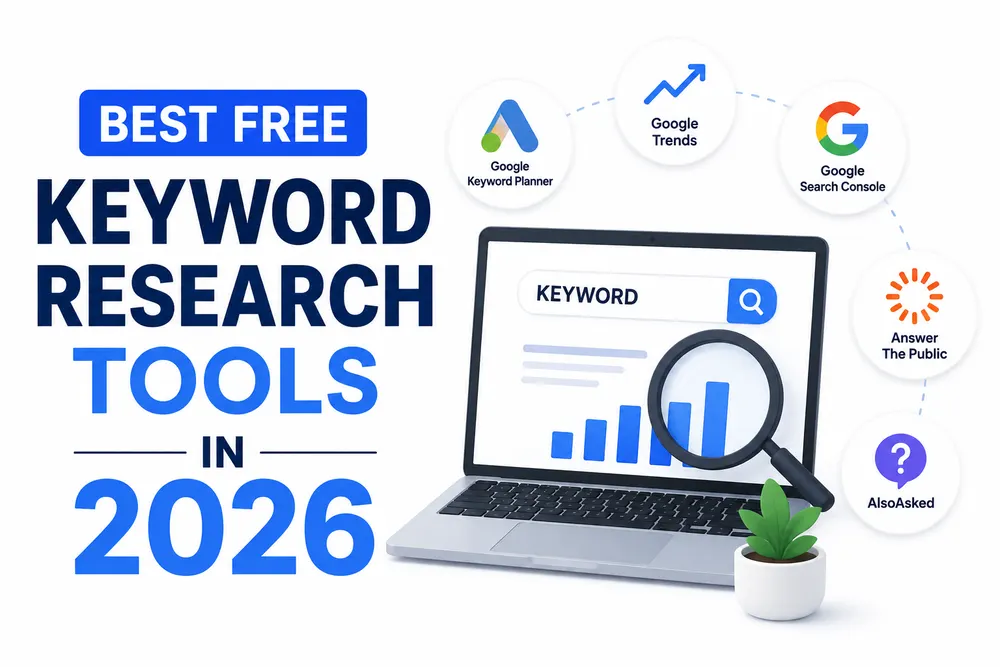
Not every SEO practitioner needs to invest in premium tools immediately. The free SEO tools available in 2025 are more capable than ever, and the combination of Google's own free tools with a handful of well-designed freemium platforms can cover the basic needs of a new website for several months before a paid tool becomes necessary.
|
Free Tool |
Primary Use Case |
Limitation of Free Version |
|
Google Search Console |
Indexation, performance, and Core Web Vitals |
Data limited to your own website only |
|
Google Analytics 4 |
Traffic analysis and user behavior tracking |
No SEO-specific keyword data |
|
Google Keyword Planner |
Keyword volume and competition data |
Requires Google Ads account; ranges not exact figures |
|
Screaming Frog (Free) |
Website crawl and technical audit |
Limited to 500 URL crawls per session |
|
Ahrefs Webmaster Tools |
Backlink profile and keyword data for your site |
Own site only; no competitor research |
|
Ubersuggest (Free) |
Keyword research and content ideas |
Limited to 3 searches per day |
|
AnswerThePublic (Free) |
Question-based keyword discovery |
Limited to 3 searches per day |
|
MozBar Chrome Extension |
Page Authority and Domain Authority in SERPs |
Limited metrics without Moz Pro subscription |
|
Keyword Surfer |
Search volumes directly in Google SERPs |
Google only; no export or historical data |
|
Bing Webmaster Tools |
Bing indexation and performance data |
Bing data only; complements not replaces GSC |
|
PageSpeed Insights |
Core Web Vitals and page speed analysis |
One URL at a time; no bulk analysis |
|
Google Trends |
Keyword trend and seasonality analysis |
No exact volume data; relative trends only |
The most effective free SEO stack for a new website in 2025 is Google Search Console combined with Google Analytics 4, Ahrefs Webmaster Tools, and the free version of Screaming Frog. This combination provides indexation monitoring, traffic analysis, basic backlink data for your own site, and technical crawl analysis at zero cost.
8. Best SEO Tools for Beginners
Beginners need SEO tools that provide clear, actionable recommendations without requiring deep technical knowledge to interpret the data. The following tools are selected specifically for their ease of use, clear interfaces, and built-in guidance for users who are new to search engine optimization.
- Ubersuggest: Neil Patel's Ubersuggest is the most beginner-friendly paid SEO tool on the market. It provides keyword research, site audit, rank tracking, and backlink data in a simplified interface with a low starting price. The dashboard is designed to surface the most important actions without overwhelming new users with data.
- Moz Pro: Moz Pro's interface is cleaner and less intimidating than Ahrefs or SEMrush, and the platform provides detailed explanations alongside each metric. The MozBar browser extension allows beginners to see Domain Authority and Page Authority scores directly in Google search results, which makes competitive research easy to understand at a glance.
- SE Ranking: SE Ranking has grown significantly in 2025 as a beginner-to-intermediate tool with an intuitive dashboard, competitive pricing, and a strong feature set that covers keyword research, rank tracking, site audits, and backlink monitoring. It is a strong alternative for users who find SEMrush and Ahrefs too complex or expensive.
- RankMath (WordPress): For bloggers and website owners using WordPress, RankMath is the best SEO plugin available. It provides on-page SEO scoring, schema markup generation, sitemap creation, and Search Console integration directly within the WordPress dashboard, making it easy for beginners to implement SEO without writing code.
9. Best SEO Tools for Agencies
SEO agencies have distinct requirements that differ from individual users. They need to manage multiple client accounts simultaneously, generate white-label reports, collaborate across team members with different access levels, and demonstrate measurable ROI to clients every month. The following tools are built with agency workflows in mind.
|
Agency Tool |
Client Management |
White-Label Reporting |
Multi-User Access |
Starting Price |
|
SEMrush Business |
Up to 40 projects |
Yes |
3 users (expandable) |
$499.95 per month |
|
Ahrefs Advanced |
Unlimited projects |
Partial (PDF exports) |
4 users |
$449 per month |
|
Raven Tools |
Unlimited clients |
Yes, fully branded |
Unlimited users |
$39 per month |
|
AgencyAnalytics |
Unlimited clients |
Yes, fully branded |
Unlimited users |
$12 per month per client |
|
SE Ranking Business |
Unlimited projects |
Yes |
Unlimited users |
$95 per month |
|
Moz Pro Large |
25 campaigns |
Partial |
5 users |
$299 per month |
For agencies, SEMrush Business is the most comprehensive single-platform solution. However, many agencies prefer a combination approach: Ahrefs for technical SEO and backlink research, AgencyAnalytics for client reporting and dashboard creation, and Google Search Console as the authoritative source of performance data. This three-tool stack gives agencies both data depth and polished client-facing output at a competitive total cost.
10. Master Comparison Table: All Tools at a Glance
The table below summarizes every major SEO tool covered in this guide with its primary category, starting price, free plan availability, best use case, and an overall rating based on data quality, feature depth, ease of use, and value for money.
|
Tool |
Category |
Starting Price |
Free Plan |
Best For |
Rating |
|
Ahrefs |
All-in-One |
$129 per month |
Webmaster Tools |
Professionals and agencies |
5 out of 5 |
|
SEMrush |
All-in-One |
$139.95 per month |
Limited |
Marketers and agencies |
5 out of 5 |
|
Moz Pro |
All-in-One |
$49 per month |
30-day trial |
Beginners and intermediate users |
4 out of 5 |
|
Screaming Frog |
Technical SEO |
259 GBP per year |
500 URLs |
Technical audits |
5 out of 5 |
|
Google Search Console |
Technical/Performance |
Free |
Yes, full |
All websites, no exceptions |
5 out of 5 |
|
Sitebulb |
Technical SEO |
$13.50 per month |
No |
Visual technical audits |
4 out of 5 |
|
KWFinder |
Keyword Research |
$49 per month |
10-day trial |
Long-tail keyword research |
4 out of 5 |
|
AnswerThePublic |
Keyword Research |
$9 per month |
3 per day |
Question-based content ideas |
4 out of 5 |
|
Ubersuggest |
All-in-One |
$29 per month |
3 per day |
Beginners on a budget |
3.5 out of 5 |
|
Majestic |
Backlinks |
$49.99 per month |
Free account |
Backlink quality analysis |
4 out of 5 |
|
AccuRanker |
Rank Tracking |
$129 per month |
No |
High-volume rank tracking |
4.5 out of 5 |
|
SE Ranking |
All-in-One |
$52 per month |
14-day trial |
Beginners to mid-level agencies |
4 out of 5 |
|
AgencyAnalytics |
Reporting |
$12 per client/month |
14-day trial |
Agency client reporting |
4.5 out of 5 |
|
Google Keyword Planner |
Keyword Research |
Free |
Yes, full |
Volume validation, PPC users |
3.5 out of 5 |
|
PageSpeed Insights |
Technical/Speed |
Free |
Yes, full |
Core Web Vitals measurement |
5 out of 5 |
11. How to Choose the Right SEO Tool for Your Needs
With so many options across a wide range of price points, choosing the right SEO tool requires an honest assessment of your current situation, your goals, and your budget. The following decision framework will help you narrow down the right choice.
Step 1: Define Your Primary SEO Goal
Before selecting a tool, identify the single most important SEO goal you are working toward right now. If you are trying to grow organic traffic through content, keyword research and rank tracking tools should be your priority. If your site has ranking problems you cannot explain, start with a technical SEO tool. If you want to build domain authority, backlink analysis tools are your most important investment.
Step 2: Assess Your Budget Honestly
The best SEO tool is the one you will actually use consistently, and that means it must fit your budget without creating financial pressure. Start with free tools if you are just beginning. Move to a tool in the $29 to $99 per month range once you are generating consistent content and have a clear sense of your keyword targets. Invest in enterprise-level tools only when your website is generating enough organic revenue to justify the cost.
Step 3: Evaluate Your Technical Comfort Level
Some SEO tools require a significant time investment to learn before they become productive. Ahrefs and SEMrush have steeper learning curves but reward the investment with far deeper data. Ubersuggest, SE Ranking, and Moz Pro are more accessible for users who are not yet comfortable with complex data interfaces. Choose a tool that matches your current skill level with room to grow.
Step 4: Take Advantage of Free Trials
Every major paid SEO tool offers a free trial period, typically ranging from 7 to 30 days. Use these trials deliberately by running the same tasks across multiple tools and comparing the quality and depth of the data they return. Pay particular attention to keyword difficulty scores, backlink index size, and the quality of technical audit recommendations, as these are the dimensions where tools differ most significantly.
12. Frequently Asked Questions
The following questions represent the most commonly searched queries related to SEO tools in 2026. They are formatted for FAQ schema markup implementation.
Q. What is the best SEO tool in 2025?
Ans. The best all-in-one SEO tool in 2026 is Ahrefs for SEO professionals and agencies due to its data accuracy, backlink index size, and feature depth. SEMrush is the better choice for digital marketers who need SEO, PPC, and content marketing tools in a single platform. For beginners and users on a tight budget, Ubersuggest or SE Ranking offer the best value. Google Search Console remains the single indispensable free tool that every website must use regardless of which paid tool they choose.
Q. Is SEMrush better than Ahrefs in 2025?
Ans. SEMrush and Ahrefs are the two leading SEO platforms in 2025 and each has strengths in different areas. Ahrefs is generally considered superior for backlink analysis, content research, and keyword data accuracy. SEMrush offers a broader feature set that includes PPC research, social media tools, and content marketing tools that Ahrefs does not provide. Most SEO professionals who can afford both tools use them in combination, with Ahrefs for research and SEMrush for reporting and client management.
Q. Are free SEO tools good enough for a new website?
Ans. Free SEO tools are entirely sufficient for a new website in its first six to twelve months. Google Search Console, Google Analytics 4, Ahrefs Webmaster Tools, and the free version of Screaming Frog provide indexation monitoring, performance tracking, backlink data, and technical auditing at no cost. As your website grows and your keyword targets become more competitive, upgrading to a paid tool becomes worthwhile for the additional data depth and efficiency they provide.
Q. How much should I spend on SEO tools per month?
Ans. The right spending level depends on your website's revenue and growth stage. New websites and bloggers should start with free tools and spend nothing until they are generating consistent traffic. Growing websites earning from their content should consider investing between $29 and $99 per month in a mid-range tool. Established websites, digital marketers, and agencies should budget between $100 and $500 per month depending on the depth of data and number of projects they manage. Never spend more on SEO tools than your website's current organic revenue can justify.
Q. What SEO tools do professional SEO agencies use in 2025?
Ans. Professional SEO agencies in 2025 typically rely on a combination of tools rather than a single platform. The most common agency stack consists of Ahrefs or SEMrush for keyword research and backlink analysis, Screaming Frog for technical audits, Google Search Console for performance data, and AgencyAnalytics or a similar reporting tool for generating branded client dashboards and monthly reports. Larger agencies often maintain subscriptions to both Ahrefs and SEMrush to cross-reference data from two independent sources.
Q. What is the best free keyword research tool in 2025?
Ans. The best free keyword research tool in 2025 is Google Keyword Planner for validating search volume data, as it draws directly from Google's own data. For discovering new keyword ideas and question-based keywords, AnswerThePublic's free tier and the Keyword Surfer Chrome extension provide useful inspiration. Ahrefs Webmaster Tools also provides free keyword data for your own website, showing which keywords your pages currently rank for and their estimated monthly search volumes.
Q. Do I need a technical SEO tool if I have a small website?
Ans. Small websites with fewer than 50 pages can perform most technical SEO checks manually or with the free version of Screaming Frog, which crawls up to 500 URLs at no cost. Google Search Console also surfaces the most critical technical issues including crawl errors, indexation problems, and Core Web Vitals failures for free. A dedicated paid technical SEO tool becomes a worthwhile investment once your website grows beyond 100 pages or when you need to schedule regular automated crawls to catch regressions quickly.
Q. How do I track my keyword rankings without a paid tool?
Ans. You can track keyword rankings without a paid tool using Google Search Console, which shows the average position for every keyword your website appears for in Google search results. While Search Console does not allow you to track individual keyword positions with the precision of a dedicated rank tracker, it provides reliable data on position trends over time. For more precise tracking without a paid subscription, the free tiers of Ubersuggest and SE Ranking each offer limited keyword position tracking each month.
Q. What is the best SEO tool for WordPress websites?
Ans. For WordPress websites, the most essential SEO tool is a dedicated WordPress SEO plugin, with RankMath and Yoast SEO being the two leading options. RankMath is generally considered the more feature-rich option in 2025, offering on-page SEO scoring, schema markup generation, XML sitemap creation, and Google Search Console integration within the WordPress dashboard at no cost. For broader SEO research beyond on-page optimization, pairing RankMath with Ahrefs Webmaster Tools or SE Ranking gives WordPress site owners a complete and affordable SEO stack.
Q. Can I use multiple SEO tools at the same time?
Ans. Yes, using multiple SEO tools simultaneously is standard practice among professional SEO practitioners. Different tools have different data sources, crawl frequencies, and algorithmic approaches, so cross-referencing data from two or more tools helps confirm findings and reduce reliance on any single data set. The most common combinations are Ahrefs for backlink and keyword research paired with Screaming Frog for technical audits, or SEMrush for all-in-one research paired with Google Search Console as the authoritative performance data source. The key is to avoid subscribing to more tools than you actively use, as unused subscriptions provide no return on investment.
Final Verdict: Best SEO Tools in 2025
The SEO tools market in 2025 offers options at every price point and for every use case, from completely free tools that cover the basics to enterprise platforms capable of managing thousands of keywords and hundreds of client accounts simultaneously. The right choice depends entirely on where you are in your SEO journey and what specific problems you need to solve.
For most users, the following recommendations provide the best starting points:
- Best overall: Ahrefs for data accuracy and professional-grade SEO research across all disciplines.
- Best for marketers: SEMrush for the broadest feature set covering SEO, PPC, content, and reporting in one platform.
- Best for beginners: SE Ranking or Ubersuggest for an affordable, accessible introduction to paid SEO tools.
- Best free tool: Google Search Console, which every website should be using regardless of what else they subscribe to.
- Best for technical SEO: Screaming Frog SEO Spider for the most thorough website crawling and technical issue detection.
- Best for agencies: SEMrush Business or Ahrefs Advanced paired with AgencyAnalytics for client reporting.
- Best for backlinks: Ahrefs Site Explorer for the largest and most frequently updated backlink database.
Invest in the tool that matches your current skill level and budget, use it consistently, act on the data it provides, and upgrade as your website grows. Consistency of use will always deliver better results than subscribing to the most expensive tool and using it sporadically.