How to Write SEO Content in 2026: The Exact Formula That Gets Pages to Page One
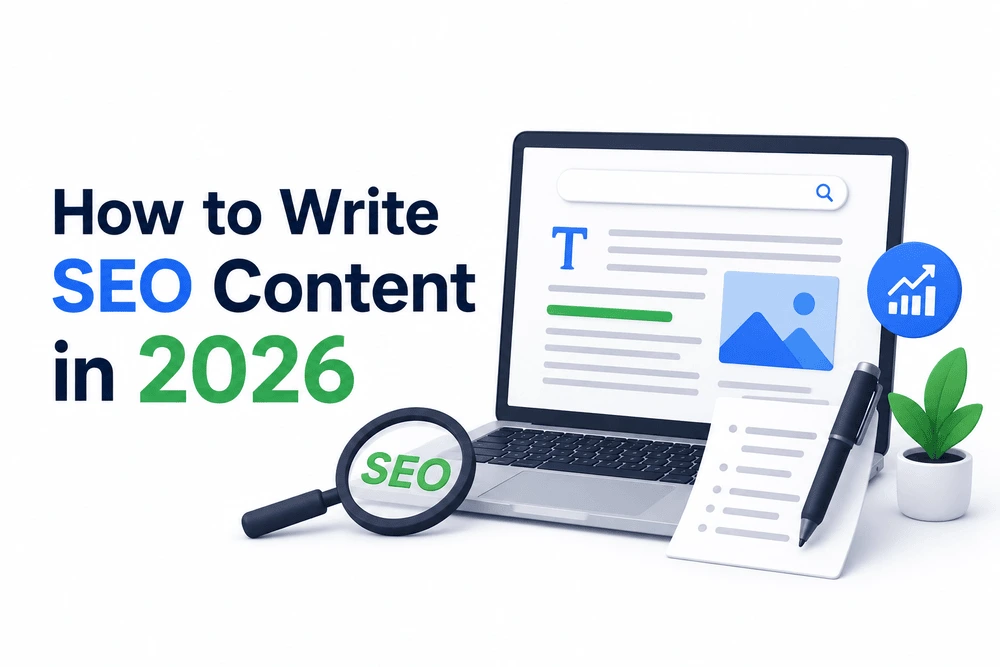
Learning how to write SEO content in 2026 means unlearning a fair bit of what used to pass for best practice. Keyword density percentages, magic word counts, exact-match phrase repetition most of that stopped mattering several algorithm updates ago, yet it still gets repeated in guide after guide. What actually gets a page to rank now is a mix of genuine usefulness, tight structure, and a bit of technical awareness about how both Google and AI search tools read content. None of it is complicated once you see the pattern, but it does require doing things in the right order.
This isn't a list of vague tips. It's the actual sequence research, structure, writing, optimization that consistently shows up behind pages that land on page one and stay there.
Step 1: Research Before You Write a Single Word
Most weak SEO content fails before the writer even opens a document. Skipping research means guessing at what the reader wants, and guessing rarely produces a page that fully satisfies a search.
Start by typing your target keyword into Google yourself. Look at the top-ranking pages not to copy them, but to understand two things: what format Google has already decided works for that query, and what those pages are missing. Every competitive keyword has some gap. Maybe the top results are all outdated, or none of them include a comparison table, or they all skip a question people are clearly asking. That gap is your opening.
|
Search Intent Type |
Example Query |
Best Content Format |
|
Informational |
"what is topical authority" |
Clear explainer with definitions and examples |
|
Comparison |
"Ahrefs vs Semrush" |
Side-by-side comparison, table-heavy |
|
How-to |
"how to fix a slow website" |
Step-by-step guide, numbered structure |
|
Transactional |
"buy SEO audit tool" |
Product or service page, minimal fluff |
|
Navigational |
"Google Search Console login" |
Direct, single-purpose page |
Matching format to intent sounds basic, but it's one of the most common reasons well-written content still fails to rank. A beautifully written narrative essay won't outrank a tight, scannable listicle if that's what searchers actually expect for that query.
Step 2: Build the Structure Before Writing the Draft
Once you understand what the page needs to cover, outline it before writing full sentences. This step gets skipped constantly because it feels like a delay, but a clear outline almost always produces a tighter, more logical final draft and it saves you from restructuring half the article later.
A solid structure usually includes one clear H1, logically ordered H2s that each answer a distinct sub-question, and a direct answer to the core query placed early, ideally within the first couple of paragraphs. Readers (and AI systems scanning for citable answers) shouldn't have to dig through three paragraphs of preamble to find the actual point.
Step 3: Write Like a Person, Not a Content Template
This is where a lot of otherwise solid SEO content falls apart. It reads like it was assembled from a checklist rather than written by someone who actually understands the topic. Sentence lengths stay suspiciously uniform. Transitions repeat ("Additionally," "Furthermore," "In conclusion") until the rhythm feels robotic. Paragraphs open with the same predictable structure over and over.
Good SEO writing varies its rhythm. Short sentences next to longer ones. Occasional fragments, if they land naturally. Specific examples instead of vague generalizations. None of this happens by accident; it takes a genuine pass of reading the draft back and asking whether a real person would actually talk this way, or whether it sounds like it's performing "helpfulness" for an algorithm.
|
Content Checklist Item |
Why It Matters |
|
Primary keyword in title, URL, and first paragraph |
Confirms topical relevance immediately |
|
Varied sentence length throughout |
Reads naturally, avoids robotic rhythm |
|
One direct answer near the top |
Helps both readers and AI Overviews |
|
Original examples or data |
Signals genuine expertise, not recycled content |
|
Internal links to related pages |
Builds topical authority and keeps readers on-site |
|
Short paragraphs (3-4 sentences max) |
Improves mobile readability significantly |
|
Descriptive image alt text |
Adds accessibility and minor ranking value |
|
Schema markup (article/FAQ) |
Helps search engines and AI tools parse content |
Step 4: Optimize for AI Search, Not Just Traditional Results
This part didn't exist as a real consideration a few years ago. AI Overviews and similar AI-generated summaries now sit above traditional search results for a large share of informational queries, and getting cited inside one of those summaries can matter as much as, or more than, ranking in the classic blue links.
To be favored here, content needs extractable structure: short, clear definitions; numbered steps; direct comparisons rather than answers buried three paragraphs deep in dense text. It doesn't mean abandoning good writing. If anything, it rewards the same clarity that's always made content easier to read, just with slightly more deliberate structuring around the core answer.
Common Mistakes That Quietly Kill Rankings
Even well-researched, well-written content can underperform if a few avoidable mistakes sneak in. Most of these are easy fixes once you know to look for them.
|
Mistake |
What Happens |
Quick Fix |
|
Answer buried too deep in the page |
Readers and AI tools bounce before finding it |
Move the direct answer into the first two paragraphs |
|
Uniform sentence structure throughout |
Reads robotic, increases AI-detection flags |
Mix short and long sentences deliberately |
|
No internal links to related content |
Misses topical authority signals |
Link to 3-5 genuinely related pages |
|
Overly promotional tone |
Feels like an ad, not information |
Focus on educating first, selling second |
|
Thin coverage of the topic |
Doesn't fully satisfy search intent |
Expand with examples, data, or sub-questions |
|
No updates after publishing |
Content ages and loses relevance |
Revisit and refresh every few months |
Why This Order Actually Matters
Skipping straight to writing without research usually produces content that technically covers a topic but misses what the searcher actually wanted. Skipping structure produces rambling drafts that need heavy editing later. And skipping the AI-readiness step means missing out on a growing share of visibility that traditional rankings alone don't capture anymore. Each step builds on the one before it; there's no real shortcut that skips ahead without costing you somewhere else.
Wrapping Up
Writing SEO content that actually ranks in 2026 isn't about memorizing a formula and applying it mechanically. Ironically, content that reads like a formula tends to underperform. It's about doing genuine research, structuring the answer clearly, writing like an actual person who understands the topic, and paying attention to how AI search tools now read and cite content. Get those four things right consistently, and rankings tend to follow without needing tricks that stop working the next algorithm update.
Frequently Asked Questions
1. How long should SEO content be in 2026?
Ans. There's no fixed number length that should match what's needed to fully answer the query, not an arbitrary word count.
2. Does keyword density still matter for ranking?
Ans. Not really; natural placement in key spots matters far more than hitting a specific percentage.
3. How do I write content that avoids sounding AI-generated?
Ans. Vary sentence length, use specific examples, and read your draft aloud to catch robotic phrasing.
4. Should every blog post include an FAQ section?
Ans. It helps for many topics, especially ones with common follow-up questions, but it's not mandatory for every post.
5. How often should I update published SEO content?
Ans. Reviewing and refreshing top-performing pages every few months usually keeps them competitive.
6. What's the biggest content mistake that hurts rankings?
Ans. Burying the actual answer too deep in the page, forcing readers and AI tools to dig for it.
7. Do I need to write differently for AI Overviews?
Ans. Somewhat clear, extractable answers near the top help, but strong writing fundamentals still apply.
8. Can short content ever outrank longer guides?
Ans. Yes, if it answers the specific query more directly and completely than longer, less-focused competitors.