How to Do Keyword Research in 2026: The Complete Free and Paid Strategy Guide

Keyword research in 2026 still starts the same way it always has: figuring out what people actually type into a search bar before you write a single word about it. What's changed is everything around that first step. Search volume alone doesn't tell the full story anymore, intent matters more than it used to, and AI-powered search means some keywords are worth targeting even if the traditional click-through numbers look unimpressive. This guide walks through the process end to end, using both free and paid tools, without assuming you already own an expensive subscription.
If you've only ever typed a phrase into a keyword tool and picked whatever had the highest volume, this will feel like a different approach. That method still works occasionally, but it leaves a lot of easier, more targeted opportunities on the table.
Step 1: Start With Seed Keywords, Not Final Ones
Before touching any tool, jot down three to five broad phrases that describe what your content or business covers. If you run a bakery blog, seed terms might be "sourdough baking," "gluten-free desserts," or "home baking tips." These aren't keywords you'll actually target directly, they're starting points that every tool and technique in this guide will branch out from.
A common mistake here is jumping straight to a specific long-tail phrase without first mapping the broader topic. That approach finds individual keywords but misses the bigger picture of what related content you should be building around them.
Step 2: Expand Your List With Free Tools
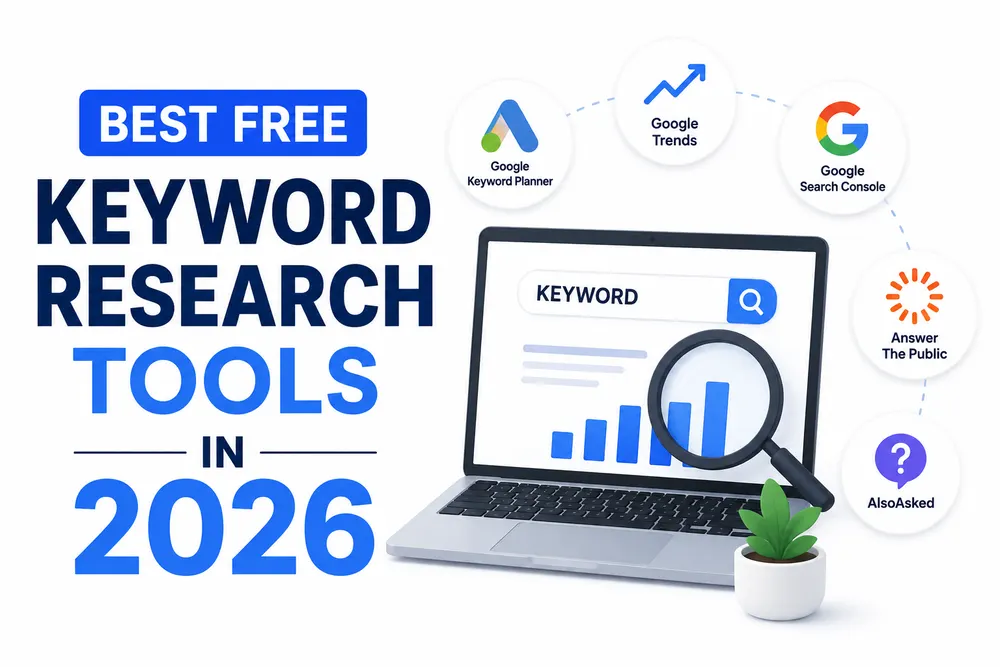
You genuinely don't need a paid subscription to do solid keyword research, especially early on. Several free tools cover the basics well enough to build a real content plan.
|
Free Tool |
Best For |
Limitation |
|
Google Keyword Planner |
Search volume ranges, straight from Google |
Volume shown as broad ranges, not exact numbers |
|
Google Search Console |
Keywords your site already ranks for (even weakly) |
Only useful once your site has some existing traffic |
|
Google Trends |
Seasonality and rising search interest |
No absolute volume, only relative interest |
|
Google Autocomplete |
Real phrases people actually search |
Manual process, no bulk export |
|
"People Also Ask" boxes |
Related questions worth answering |
Limited to what's currently showing for that query |
|
AnswerThePublic (free tier) |
Question-based keyword ideas |
Daily search limits on the free plan |
A practical workflow with just these: type a seed keyword into Google, screenshot the "People Also Ask" box, scroll to related searches at the bottom of the page, and repeat with each new phrase that shows up. Within twenty minutes, you'll usually have a solid list of long-tail variations that a paid tool would have handed you instantly, just with a bit more manual effort.
Step 3: Bring in Paid Tools for Depth and Competition Data
Free tools are enough to get started, but they fall short once you need to understand competition levels, exact search volume, or how difficult a keyword actually is to rank for. This is where paid tools earn their cost, particularly for anyone managing content at scale.
|
Paid Tool Category |
What It Adds |
Worth It When |
|
All-in-one SEO platforms (Ahrefs, Semrush) |
Exact volume, keyword difficulty scores, competitor gap analysis |
You're publishing regularly and need to prioritize efficiently |
|
Rank tracking add-ons |
Ongoing visibility into how targeted keywords perform over time |
You want to measure ROI on specific content investments |
|
Content optimization tools |
Suggestions based on top-ranking competitor content |
You're optimizing existing pages, not just planning new ones |
|
API access / bulk export |
Automating research across hundreds of keywords at once |
You're working across multiple sites or clients |
If budget is tight, a single mid-tier paid tool used well will outperform juggling several free ones inconsistently. Most experienced SEOs land on one main paid platform and supplement it with free tools for quick, specific checks rather than trying to replace it entirely.
Step 4: Understand What the Numbers Actually Mean
Search volume gets treated like the only metric that matters, but on its own it's fairly misleading. A keyword with 10,000 monthly searches and brutal competition might bring you far less traffic than a 200-search keyword you can realistically rank for within a few months.
Three numbers matter together, not separately: volume (how many people search it), difficulty (how hard it is to rank, based on current competition), and intent (whether the searcher actually wants what you're offering). A high-volume keyword with mismatched intent say, targeting "SEO" when your page is a specific tool tutorial won't convert even if you somehow rank for it.
Step 5: Prioritize With a Simple Framework
Once you have a long list of candidate keywords, the real skill is deciding what to actually target first. Trying to rank for everything at once spreads effort too thin and usually delays real progress on all of it.
A rough scoring approach works well here: rate each keyword's volume, difficulty, and intent match on a simple low-medium-high scale, then prioritize anything that scores well across at least two of the three.
|
Keyword Type |
Volume |
Difficulty |
Best Approach |
|
Broad head terms ("SEO") |
High |
Very High |
Long-term target, not a starting point |
|
Mid-tail phrases ("SEO for small business") |
Medium |
Medium |
Good balance for growing sites |
|
Long-tail questions ("how to do local SEO for a bakery") |
Low-Medium |
Low |
Fastest realistic wins for newer sites |
|
Branded or navigational terms |
Varies |
Low (if it's your own brand) |
Easy to rank, but limited new-traffic value |
Newer sites especially benefit from leaning into long-tail, lower-difficulty keywords first. It's less exciting than chasing a massive head term, but it builds authority and traffic momentum that eventually makes those bigger keywords realistic too.
Don't Forget AI Search Behavior
One shift worth factoring in: a growing share of searches now get answered directly inside AI Overviews or AI chat tools before a user ever clicks through to a website. This doesn't make keyword research pointless if anything, it makes intent-matching more important, since content that clearly and directly answers a question has a better shot at being cited inside those AI-generated summaries, even when the raw click-through numbers for that keyword look modest on paper.
Wrapping Up
Good keyword research in 2026 isn't about finding one magic tool that spits out perfect answers. It's a layered process starting broad with seed terms, expanding with free tools, adding depth through paid platforms when it makes sense, and then prioritizing based on realistic difficulty rather than chasing the biggest numbers on the page. Do this consistently, and the keywords you target will actually convert into traffic instead of just looking impressive in a spreadsheet.
Frequently Asked Questions
1. Can I do effective keyword research without paying for tools?
Ans. Yes, free tools like Google Keyword Planner, Trends, and autocomplete can build a solid foundation, especially for smaller sites.
2. What's more important, search volume or keyword difficulty?
Ans. Neither alone matters much; the best keywords balance decent volume with realistic difficulty for your site's current authority.
3. How many keywords should I target per blog post?
Ans. Focus on one primary keyword per post, with a few closely related secondary terms woven in naturally.
4. Are long-tail keywords still worth targeting in 2026?
As. Yes, especially for newer sites, since they're easier to rank for and often convert better due to specific intent.
5. How often should I redo keyword research for existing content?
Ans. Revisiting target keywords every few months helps catch shifts in search behavior and new opportunities.
6. Does keyword research matter for AI Overview visibility?
Ans. Yes, intent-matched, clearly answered content still gets pulled into AI-generated summaries more often.
7. Should beginners start with free or paid tools?
Ans. Start free to learn the process, then add a paid tool once you're publishing consistently and need deeper data.
8. What's the biggest mistake people make in keyword research?
Ans. Chasing high-volume keywords without considering difficulty or whether the intent actually matches their content.