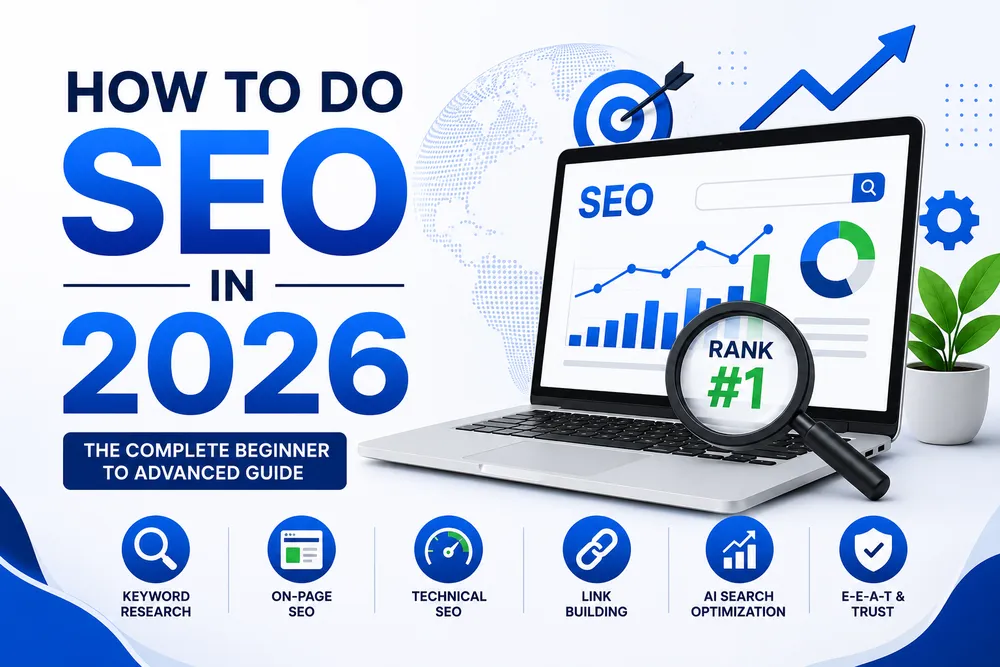
How to Do SEO in 2026: The Complete Beginner to Advanced Guide
If you've been putting off learning SEO in 2026, this is the year that catches up with you. Search itself has changed shape. Google now serves AI Overviews for a huge chunk of queries, people ask ChatGPT and Gemini questions they used to type into a search bar, and ranking on page one no longer guarantees a click. So the question isn't really "does SEO still matter" it's "what does SEO actually look like now, and how do you do it without wasting months on tactics that stopped working two algorithm updates ago."
This guide walks through it from the ground up. Whether you've never touched a website's backend or you've been writing meta descriptions for years, there's something here worth adjusting.
Start With Intent, Not Just Keywords
Old-school SEO treated keywords like ingredients you sprinkled into a page until the recipe "worked." That mindset is dead. Search engines today are far better at understanding what someone actually wants when they type a query, and they reward pages that answer the question completely rather than pages that just mention the phrase a lot.
So before you write a word, ask what the searcher is trying to accomplish. Are they comparing options? Looking for a quick answer? Ready to buy? A blog post targeting "best running shoes for flat feet" needs a different structure than one targeting "how to fix flat feet pain," even though the keywords overlap.
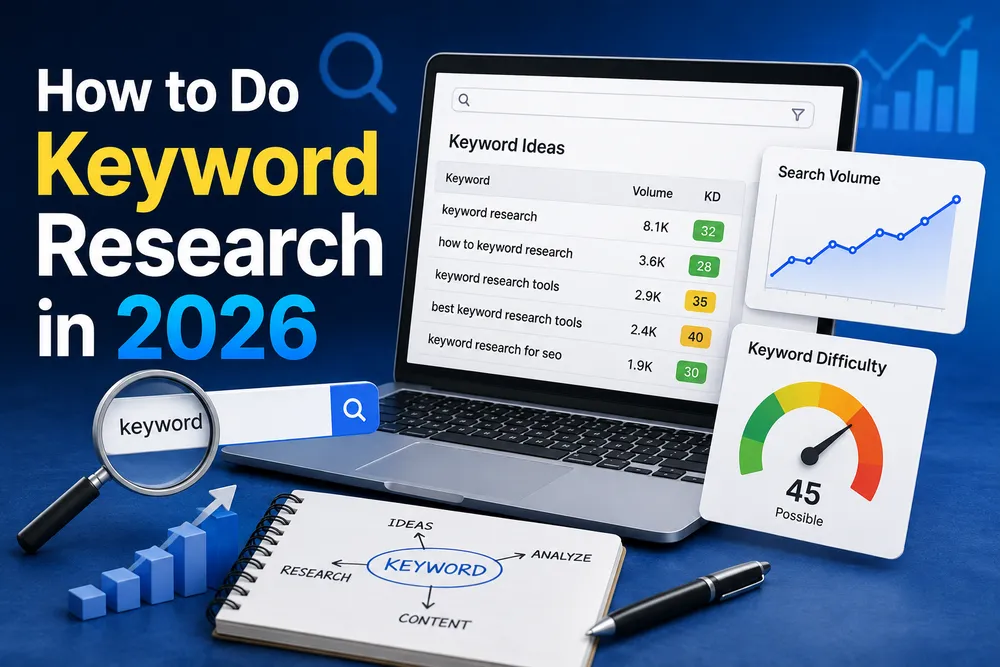
Keyword research tools still have a place they help you spot volume, competition, and related phrases you might not have thought of. But treat the keyword as a starting point for research, not the finish line.
On-Page SEO: The Fundamentals Still Work
A lot of people assume on-page SEO got complicated. It didn't, really. The basics from five years ago mostly still hold, they just need to be done with more care.
|
On-Page Element |
What to Focus On in 2026 |
|
Title Tag |
Front-load the primary keyword, keep it under 60 characters, write for humans first |
|
Headings (H1-H3) |
Use them to structure the actual argument of the page, not just to stuff keywords |
|
Meta Description |
Write it like ad copy it needs to earn the click, not just describe the page |
|
Content Depth |
Cover the topic thoroughly; thin 400-word posts rarely rank for competitive terms anymore |
|
Internal Linking |
Link to related pages using natural anchor text, not exact-match keywords every time |
|
Images |
Compress file size, use descriptive alt text, and avoid stock photos that add nothing |
One thing worth calling out: keyword density as a metric barely matters anymore. Write naturally, mention your primary keyword where it makes sense, and let related terms show up organically because you actually understand the topic.

Technical SEO Hasn't Gotten Easier
If anything, technical SEO has more moving parts than it used to, mainly because page experience signals carry real weight now. Core Web Vitals, mobile usability, and crawl efficiency all factor into whether Google can even see your content properly, let alone rank it.
A few things worth checking regularly:
- Page speed, especially on mobile connections, not just desktop broadband
- Whether your site has duplicate or thin pages eating up crawl budget
- Broken internal links and orphaned pages with no links pointing to them
- Structured data (schema markup) so search engines and AI systems can parse your content correctly
- A clean XML sitemap and an up-to-date robots.txt file
Structured data deserves extra attention this year. FAQ schema, article schema, and organization schema all help search engines and AI Overviews summarize your content accurately and if an AI system misreads your page, it might just skip citing you altogether.
Content Strategy: Depth, Originality, and E-E-A-T
Google's guidelines still lean heavily on E-E-A-T Experience, Expertise, Authoritativeness, and Trustworthiness. In 2026, this isn't just a checkbox exercise. With so much AI-generated content flooding the web, search engines are actively trying to separate content written by someone who actually knows the subject from content that reads like it was assembled from other articles.
That means original insight matters more than ever. First-hand examples, specific data, screenshots, case studies anything that couldn't have been copied from a competitor's blog post gives your content an edge. Generic "ultimate guide" posts that repeat what's already on page one rarely break through anymore.
Content freshness matters too. Updating an older post with current statistics, new screenshots, and revised advice can often outperform publishing something brand new.
Link Building: Quality Over Everything
Backlinks are still one of the strongest ranking signals, but the game has gotten pickier. Buying links in bulk or trading them through link farms is riskier than it's ever been Google's spam detection has gotten noticeably better at spotting unnatural link patterns.
|
Link Building Method |
Effort Level |
Long-Term Value |
|
Guest posting on relevant, niche sites |
Medium |
High |
|
Digital PR and journalist outreach (HARO-style) |
High |
Very High |
|
Building free tools or calculators people naturally link to |
High upfront, low ongoing |
Very High |
|
Broken link building |
Medium |
Medium |
|
Directory and citation listings (for local SEO) |
Low |
Medium (local only) |
|
Buying links in bulk |
Low |
Negative risk of penalty |
If you're short on time, focus on one or two methods that fit your niche rather than spreading effort thin across all of them.

Optimizing for AI Search, Not Just Google's Blue Links
This is the part that genuinely separates 2026 SEO from a few years back. AI Overviews, ChatGPT search, Perplexity, and similar tools now pull answers directly from web content and present them without a click. Some marketers call this "AEO" (Answer Engine Optimization) or "GEO" (Generative Engine Optimization), though it's really just SEO adapted to a new interface.
To show up in these AI-generated answers, your content needs to be structured so machines can extract clear, quotable answers short definitions, numbered steps, direct comparisons. Burying the answer under three paragraphs of preamble hurts you here more than it ever did with traditional search.
It also helps to be cited elsewhere on the web. AI systems tend to trust and reference sources that already show up across multiple credible sites, which loops back to why digital PR and genuine authority-building matter so much right now.
A Simple Monthly SEO Checklist
|
Task |
Frequency |
|
Keyword and competitor research |
Monthly |
|
Publish new, in-depth content |
Weekly or bi-weekly |
|
Update and refresh older posts |
Monthly |
|
Technical site audit (speed, broken links, crawl errors) |
Monthly |
|
Backlink outreach or digital PR |
Ongoing |
|
Track rankings and organic traffic |
Weekly |
Consistency beats intensity here. A site that publishes solid content every week for a year will usually outperform one that publishes twenty posts in a single burst and then goes quiet.
Wrapping It Up
SEO in 2026 rewards patience, genuine expertise, and content built for actual humans first. The tactics that used to work through sheer volume keyword stuffing, cheap backlinks, thin content churned out fast carry more risk than reward now. Focus on answering questions properly, keeping your site technically clean, and earning links instead of chasing them, and the rankings tend to follow.
Frequently Asked Questions
1. Is SEO still worth doing in 2026 with AI search tools around?
Ans. Yes. AI tools still pull their answers from indexed web content, so ranking well remains important for visibility.
2. How long does it take to see SEO results?
Ans. Most sites start seeing meaningful movement in 3 to 6 months, though competitive niches can take longer.
3. Do I need to hire an SEO agency, or can I do it myself?
Ans. Beginners can handle on-page and content SEO alone; technical audits and link building often benefit from expert help.
4. What's the difference between SEO and AEO?
Ans. AEO focuses on getting cited in AI-generated answers, while SEO covers ranking in traditional search results the two now overlap heavily.
5. How important is website speed for rankings?
Ans. Very important. Slow-loading pages hurt both user experience and Core Web Vitals scores, which affect rankings.
6. Should I still write long-form content in 2026?
Ans. Only if the topic genuinely needs the length; depth matters more than word count for its own sake.
7. Are backlinks still a major ranking factor?
Ans. Yes, quality backlinks remain one of the strongest signals, but low-quality or bought links can now do more harm than good.
8. How often should I update old blog posts?
Ans. Reviewing and refreshing top-performing posts every 6 to 12 months usually keeps them competitive.